
Washington County Criminal Court Records
A criminal court record is the case file maintained by the court after prosecution begins. In Washington County, felony criminal records are Superior Court files. State Court handles misdemeanor criminal cases and traffic violations, with the State Court Solicitor and a locally appointed public defender. Magistrate Court may appear earlier in a criminal matter for warrants, first appearances, commitment hearings, and preliminary steps, but the full filed criminal case record is in the trial court that receives the prosecution.
Washington County is part of the Middle Judicial Circuit. The Middle Judicial Circuit District Attorney is Tripp Fitzner, and the DA assists Superior Court with felony prosecutions. The DA site lists the circuit office at 114 Jefferson Street, Swainsboro, GA 30401, with weekday hours from 8:00 a.m. to 5:00 p.m. The county Superior Court page links criminal defense users to the Middle Judicial Circuit Public Defender through the Georgia Public Defender Council.
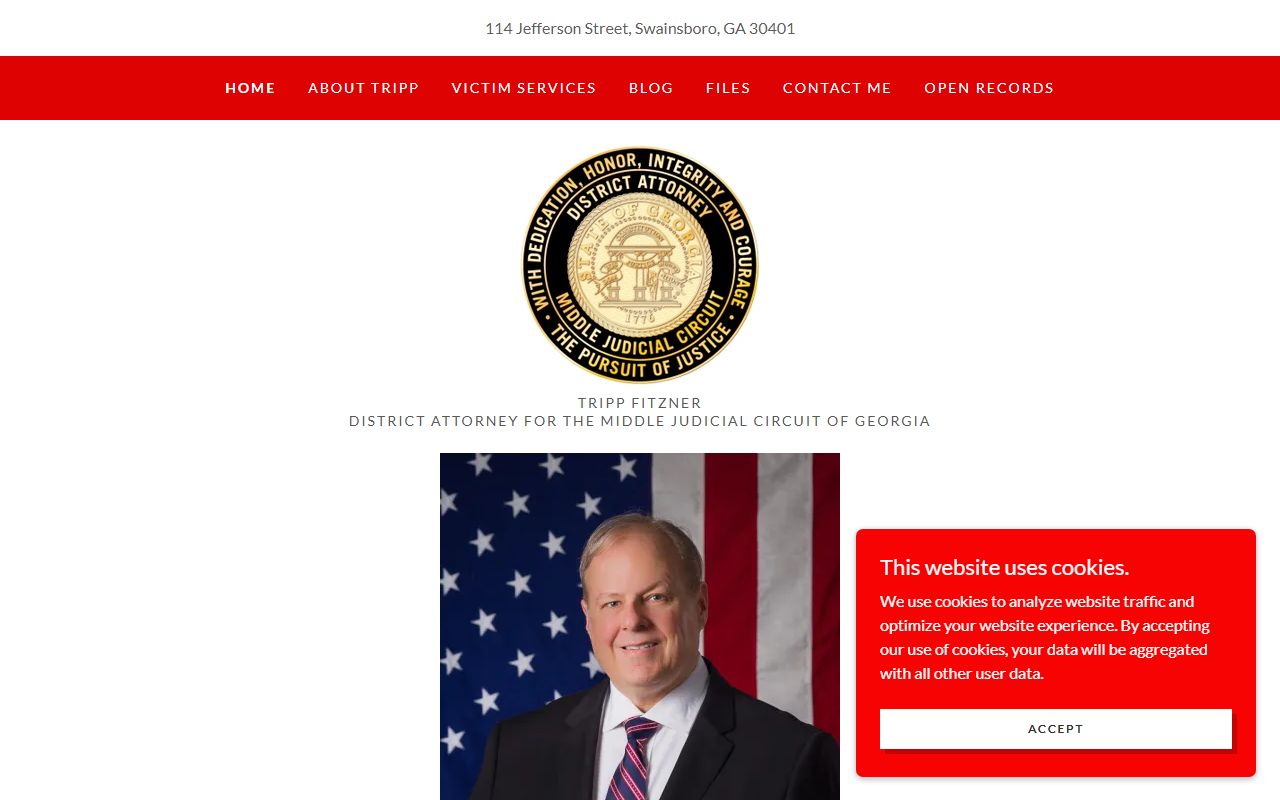
The prosecutor's role matters because a court record does not become a full criminal case file until charges are filed and tracked through the court system.
Search Washington County Criminal Cases
Washington County does not publish a single free public portal for all criminal case files. The Clerk of Superior Court is the contact point for Superior and State criminal records, while the court's online access options are limited to provider systems, e-filing channels, payment sites, and direct copy requests. The Georgia Courts e-access page states that provider accounts are required for court record searches. Certified copies or older case papers should be requested directly from the clerk.
- Decide whether the case is a felony, misdemeanor, traffic criminal matter, warrant matter, or juvenile matter.
- Use the Clerk of Superior Court for Superior felony and State Court misdemeanor criminal files.
- Use the case number, defendant name, charge, warrant number, or court name from a notice or roster entry.
- Ask for the docket, disposition, sentencing order, or certified copy needed for the specific purpose.
- Use the Sheriff's inmate roster only to identify booking charges, arresting agency, bond, and court fields, then verify the court case with the clerk.
The U.S. Attorney for the Middle District of Georgia handles federal prosecutions, which are separate from Washington County criminal court records. Federal criminal case files are not obtained from the county clerk.
Use federal sources only when the case was filed in U.S. District Court rather than Washington County Superior or State Court.
Washington County Criminal Case Flow
Criminal court records build in stages. A booking charge or arrest warrant can appear before the full case file exists. Once the prosecutor files an accusation, indictment, or other charging document, the case moves into the court record. Later entries may show arraignment, motions, plea negotiations, trial settings, verdict, dismissal, sentencing, probation, restitution, and appeal notices.
Case flow: Charges Filed › Arraignment › Pretrial / Motions › Plea or Trial › Disposition › Sentencing
| Stage | What Happens |
|---|---|
| Charges Filed | The prosecutor files an accusation or indictment, or the case reaches the trial court from earlier proceedings. |
| Arraignment | The defendant is formally advised of the charge and enters a plea. |
| Pretrial / Motions | Attorneys file requests, raise legal issues, and prepare the case for plea or trial. |
| Plea or Trial | The case resolves by plea, bench trial, jury trial, dismissal, or other court action. |
| Disposition | The court records the final outcome for each charge or count. |
| Sentencing | The court enters jail, prison, probation, fines, costs, restitution, or other ordered terms after conviction. |
Washington County Criminal Record Fields
A Washington County criminal court record can include both court-event fields and charge-specific fields. The public inmate roster gives the clearest observed charge-row example, showing name, booking status, arrest date, arresting agency, total bond, warrant number, count, statute, description, misdemeanor or felony label, and court. The court case file adds pleadings, motions, hearings, orders, plea or trial result, disposition, sentence, and copy certification status.
| Field | What It Shows |
|---|---|
| Case Number | The court identifier used to request docket entries or copies. |
| Defendant | The person accused in the criminal case. |
| Charge | The filed accusation, indictment count, citation, or offense description. |
| Statute | The Georgia code or local code section tied to the charge when listed. |
| Court | Superior Court for felonies or State Court for misdemeanors and traffic criminal matters. |
| Plea | The defendant's formal answer, such as guilty, not guilty, or nolo contendere. |
| Disposition | The final result, including conviction, dismissal, acquittal, plea outcome, or nolle prosequi. |
| Sentence | Jail, prison, probation, fines, restitution, court costs, or other terms ordered by the judge. |
The public defender source helps identify defense-side services rather than case results. The Georgia Public Defender Council is the official statewide entry point linked from the county Superior Court page.

Defense contacts should not be treated as court-record custodians; court copies still come from the clerk or the court system.
Washington County Charges vs Convictions
A charge is an accusation. A conviction is a final finding or plea of guilt. Washington County criminal court records can show charges that were amended, reduced, dismissed, dead docketed, nolle prossed, or resolved by acquittal. For a closer look at the arrest-to-charge path, use the Washington County arrest records and court charges page.
| Charge | Conviction | |
|---|---|---|
| Meaning | An accusation filed or listed in the case. | A guilty plea, verdict, or other final guilty finding. |
| Timing | Appears early or during prosecution. | Appears after plea, trial, or final disposition. |
| Effect | May change, be dismissed, or be replaced. | Can support sentencing, probation, fines, or other orders. |
| Proof | Not proof of guilt by itself. | Reflects the court's resolved outcome. |
Read Dispositions and Sentences
Disposition lines should be read count by count. One charge may be dismissed while another results in a plea. A sentence may include jail time, prison time, probation, restitution, fines, court costs, or a combination. Superior Court felony records may include sentencing orders and probation terms. State Court misdemeanor records may include pleas, bench-trial or jury-trial entries, dispositions, fines, probation, and cost records.
Federal news can help explain why some Washington County criminal events do not appear in local county criminal court records. A DOJ release reported a federal hate-crime guilty verdict involving a Washington County investigation, and a later release reported federal sentencing in that same matter.
The DOJ guilty-verdict release is an example of a Washington County-linked case handled federally.
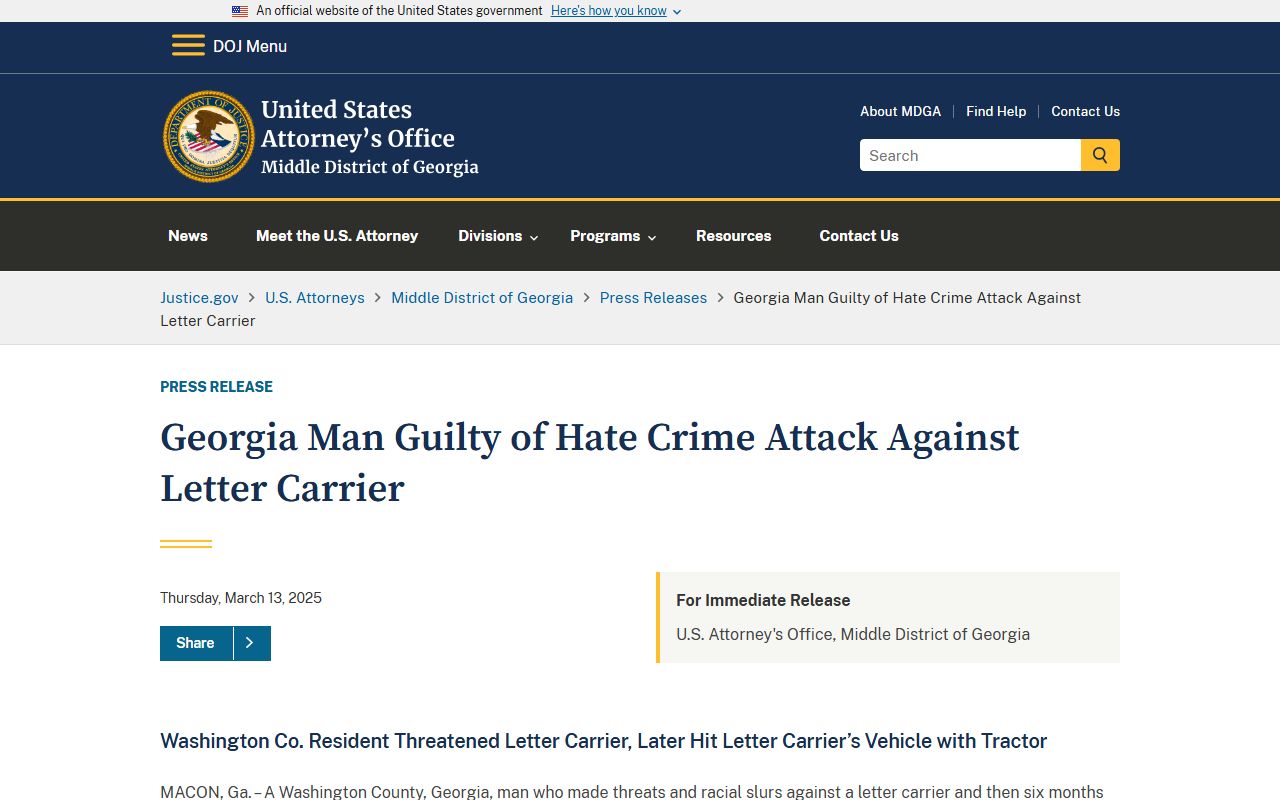
Federal verdicts and county criminal dispositions should be checked in their own court systems because the custodians and case numbers differ.
The related DOJ sentencing release shows how a separate sentencing event can follow the verdict in a criminal case timeline.
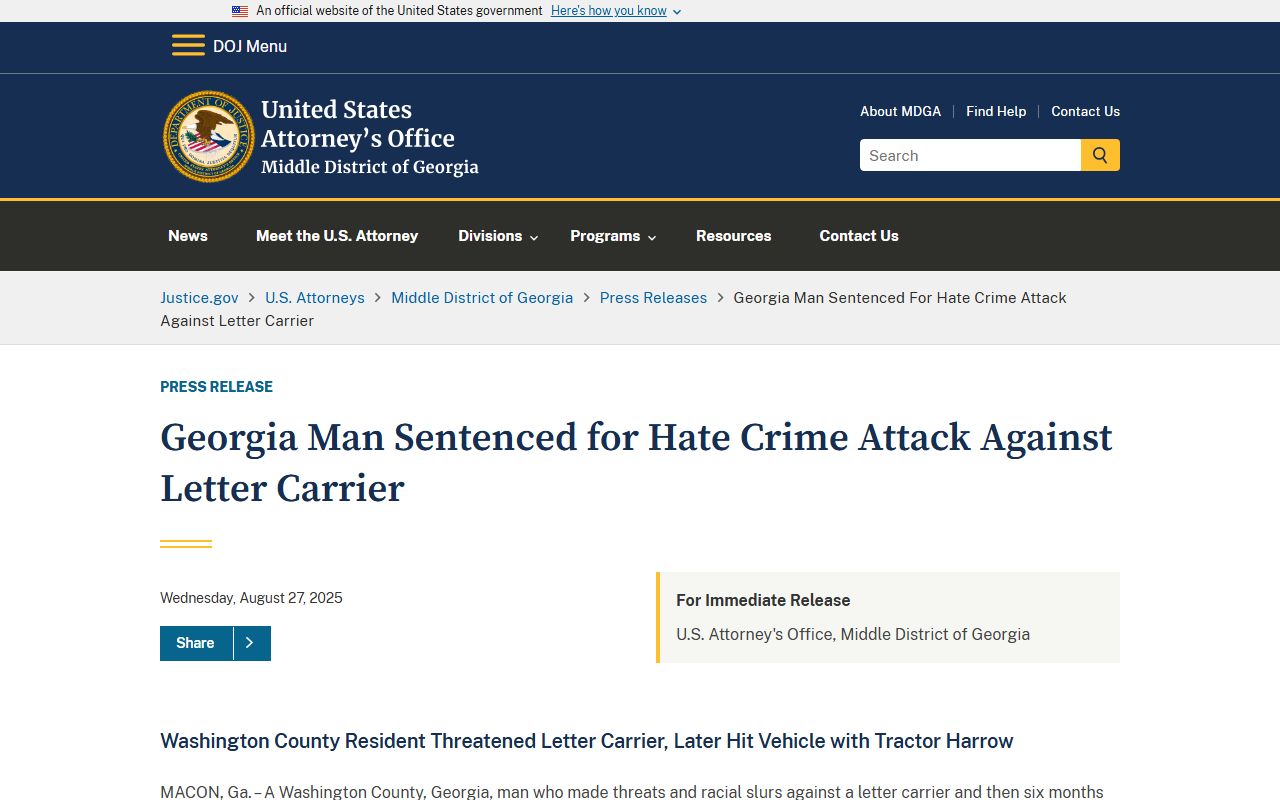
That distinction is the same reason docket events, disposition entries, and sentencing orders should be read in sequence.
Sealed vs Restricted Records
Georgia practice often uses the term record restriction for criminal-history access limits. People may still call it expungement, but the practical process can involve the arresting agency, the prosecutor, the court, the Georgia Crime Information Center, and certified dispositions. Washington County arrest data may start with the Sheriff's Office or a city police department, while final court dispositions come from State or Superior Court.
| Sealed | Restricted | |
|---|---|---|
| Visibility | Public access is limited by court order or law. | Criminal-history dissemination is limited when eligibility rules are met. |
| Common Trigger | Juvenile, adoption, mental-health, or court-ordered privacy issue. | Dismissal, nolle prosequi, dead docket, or other eligible result under Georgia law. |
| Proof Needed | Court order or controlling statute. | Certified disposition, agency processing, prosecutor action, or court order. |
| Limits | Some officials may retain limited access. | It does not promise every local or private copy disappears. |
Washington County Criminal Access Rules
Criminal court records are generally public once filed, but public access is not unlimited. The Georgia Open Records Act opens public records unless a law or court order makes them exempt. Uniform Superior Court Rule 21 begins from public access to Superior Court records but allows access limits under law or rule procedure. O.C.G.A. Section 50-18-72 lists exemptions for records made confidential by other law. Juvenile, sealed, adoption, mental-health, victim, and personal-identifier material can be withheld or redacted.
Key access point: For Superior and State criminal records, request docket entries, dispositions, and certified copies from the Clerk of Superior Court.
Restricted Criminal Records
Juvenile criminal-style matters are not public in the same way adult files are public. Washington County Juvenile Court handles CHINS, delinquency, dependency, neglect, and juvenile traffic, and access is restricted. Adoption and mental-health material may also be confidential even when the case was filed in a court. Personal identifiers such as Social Security numbers, financial account numbers, minor names, and protected victim information may be redacted.
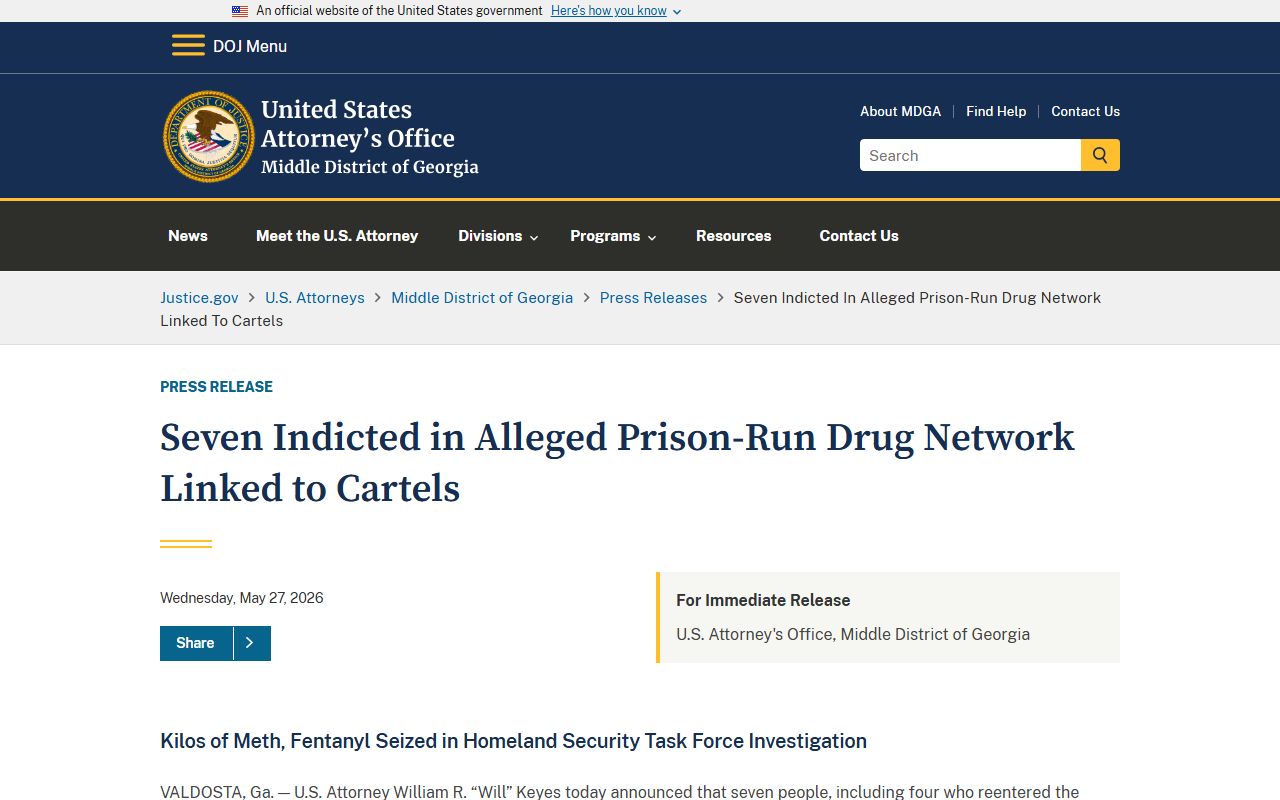
Recent federal charges can also create confusion. A DOJ release about a prison-run drug network linked to cartels named Washington State Prison as a location in a federal indictment. That does not mean the indictment is a Washington County Superior Court file.
The DOJ indictment release illustrates how a Washington County location can be tied to a federal criminal case.
When a case is federal, PACER and the federal clerk are the record path; when it is local, use the Washington County court office that owns the file.