
Washington County Arrest Records and Charges
Washington County arrest records begin with law enforcement and jail booking. The Sheriff's Office inmate lookup is the clearest public source for current booking data. It can show a person's name, booking status, sex, height, weight, address, arrest date, arresting agency, days in jail, total bond, warrant number, count, statute, description, misdemeanor or felony label, and court. Those fields describe the custody and booking side, not the final result of the criminal case.
Court charges after arrest are different. Once a prosecutor files an accusation, indictment, or other charging document, the charge record becomes part of the court case. Felony charges generally move through Superior Court after prosecution begins. Misdemeanor charges and traffic criminal matters are handled in State Court. The full case file and outcome belong with Washington County criminal court records, while the jail roster helps identify the first booking details and possible court field.
The Washington County Sheriff's Office inmate lookup is the official roster source documented in the research.
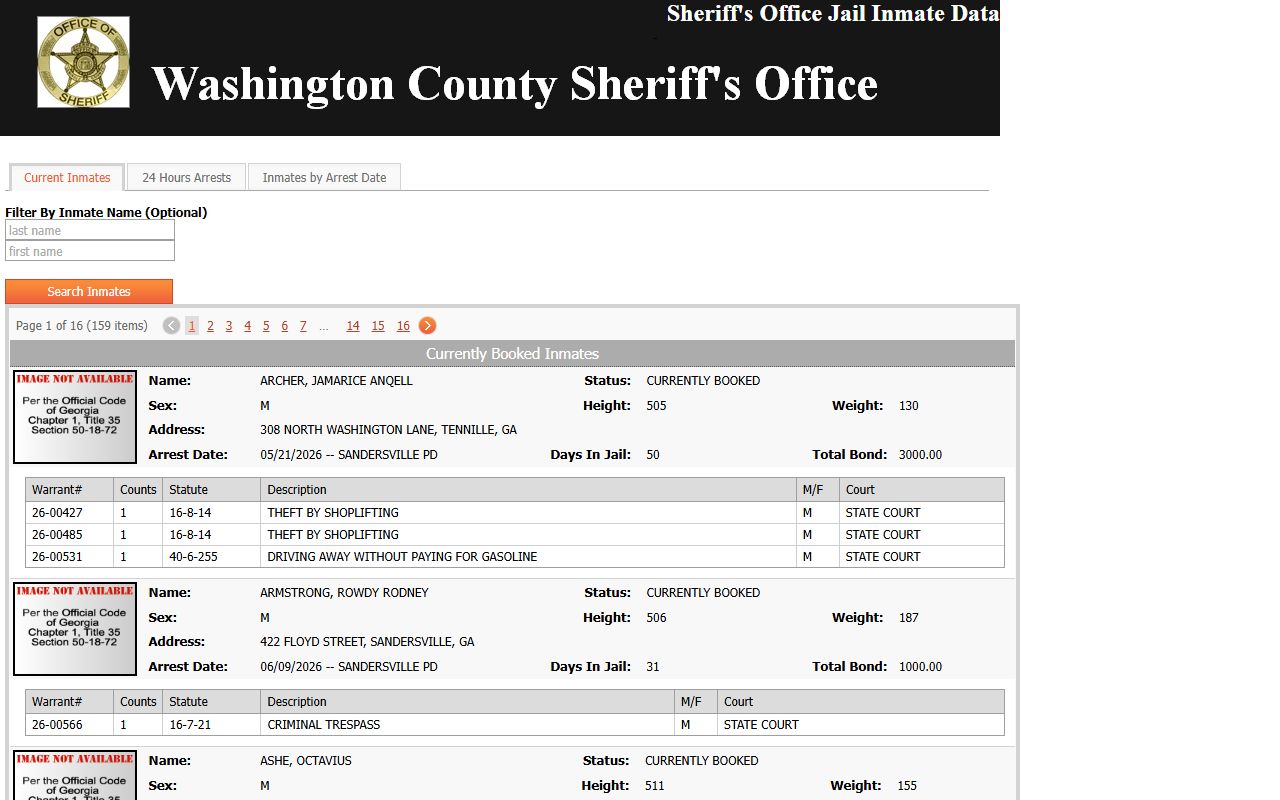
Roster charge rows should be treated as starting points because filed charges can later be amended, reduced, dismissed, or replaced in court.
Find Washington County Arrest Records
Use two checks for Washington County arrest records and charges. First, check the booking or custody source for current jail information. Second, verify filed charges, dispositions, sentencing, and certified outcomes with the court that owns the case. The county does not publish a single free public portal that combines every arrest record, jail entry, prosecutor filing, and final court disposition.
- Check the Sheriff's inmate lookup for current booking data and charge rows.
- Record the arresting agency, arrest date, warrant number, statute, charge description, court field, and bond information.
- Use Superior Court for felony case records and State Court for misdemeanor or traffic criminal case records.
- Ask the Clerk of Superior Court for docket entries, dispositions, sentencing orders, or certified copies.
- Use Magistrate Court for arrest warrant, search warrant, first appearance, and commitment-hearing questions.
- Use statewide sources only for records they actually cover, such as state-prison custody, sex offender registry data, or state criminal-history processes.
The Georgia Department of Corrections Washington County Jail listing is a facility reference, not the local court charge record.
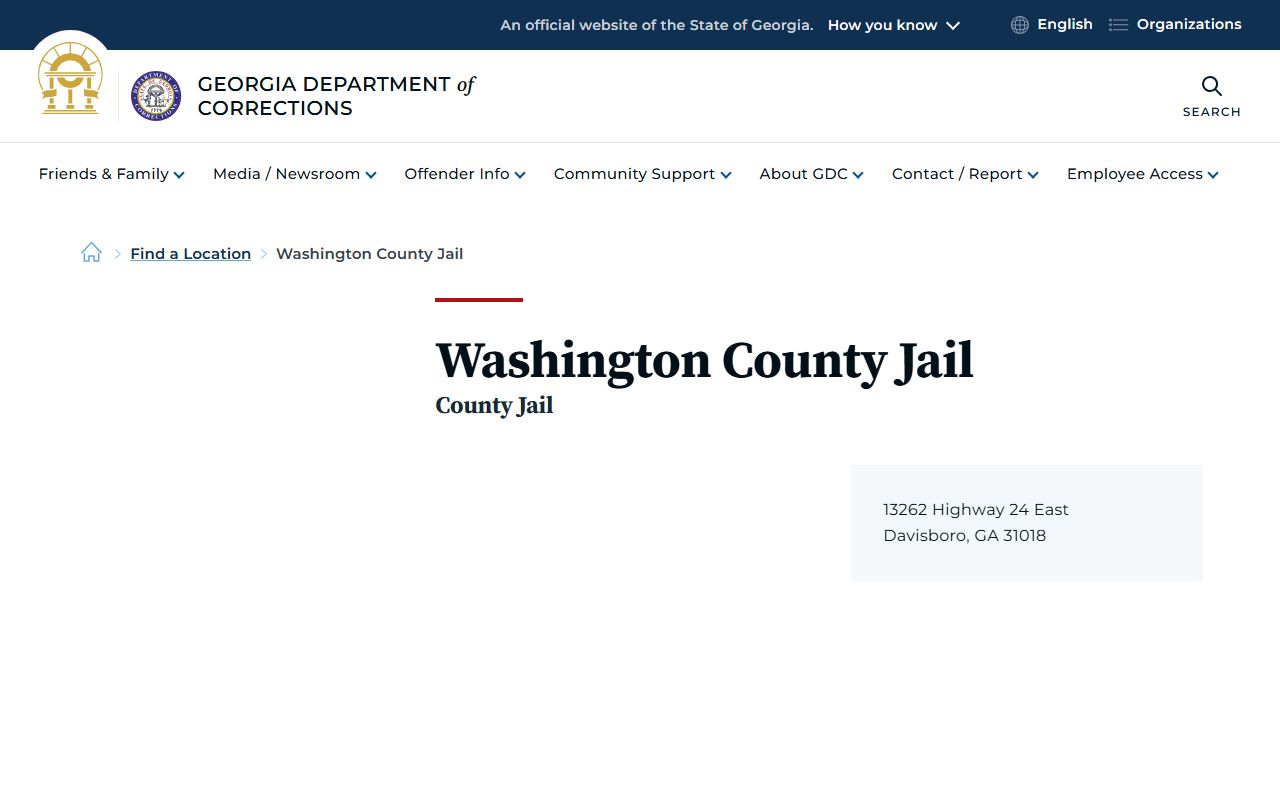
The research found a location conflict between the county jail contact page and the GDC listing, so phone confirmation is sensible before any in-person jail visit.
Charges After Arrest Documents
An arrest does not itself prove a court charge or conviction. After the arrest, a prosecutor reviews the case and files the charge through the court process when prosecution goes forward. Washington County felony prosecutions involve the Middle Judicial Circuit District Attorney. Misdemeanor and traffic criminal cases in State Court involve the State Court Solicitor and locally appointed public defender structure described in the county research.
| Document | Who Files It | Common Use | Where It Leads |
|---|---|---|---|
| Complaint | Officer, prosecutor, or court process | Early criminal allegation or lower-court filing. | May support warrants, first appearances, or later prosecution. |
| Accusation / Information | Prosecutor | Prosecutor-filed charge, often used in non-indictment matters. | Creates or continues a court case with docket entries. |
| Indictment | Grand jury | Felony charging document for serious cases. | Moves the felony case through Superior Court. |
Georgia terminology can vary by case type. The important point for Washington County arrest records is the split between a booking charge and a filed court charge. The booking record may list a statute and description, while the filed charge controls the court case path and final disposition.
Washington County Charge Status
Charge status can change as the case moves. A roster may show the arrest charge. The court record may show an accusation or indictment. Later court entries may show amended charges, reduced counts, dismissals, nolle prosequi entries, pleas, verdicts, or sentencing. For that reason, a charge row should never be read as the final result unless the court disposition confirms it.
| Status | What It Means | Where to Verify |
|---|---|---|
| Pending | The charge or case has not reached final disposition. | Court docket or clerk status check. |
| Amended / Reduced | The prosecutor or court changed the original filed charge. | Filed accusation, indictment, order, or disposition entry. |
| Dismissed | The charge or case was ended by the court or prosecutor. | Certified disposition from the Clerk of Superior Court. |
| Nolle Prosequi | The prosecutor chose not to proceed on the charge. | Court docket, prosecutor action, or disposition record. |
| Convicted | The defendant was found guilty or entered a guilty plea. | Disposition and sentencing order. |
Note: A single arrest can produce more than one charge, and each count can end in a different status.
Washington County Charges vs Convictions
Washington County arrest records and court charge records can show accusations before guilt is decided. A charge is the government's allegation. A conviction is a court outcome. This distinction is central when reading booking records, case dockets, and criminal histories. For the full case file, including plea, verdict, disposition, and sentence, use the Washington County criminal court records process.
| Charge | Conviction | |
|---|---|---|
| Definition | An allegation listed at booking or filed in court. | A guilty plea, verdict, or finding entered by the court. |
| Timing | Appears before final case resolution. | Appears at or after disposition. |
| Can Change | Yes, it may be amended, reduced, or dismissed. | Only changes through court action, appeal, or post-judgment relief. |
| Best Proof | Charging document or docket entry. | Certified disposition or sentencing order. |
Statewide Arrest and Charge Lookups
Some Washington County arrest or charge questions move beyond local court records. The Georgia DOC Find an Offender page is used for state-prison offender lookup after a person has been transferred into GDC custody. It is not the Washington County jail roster and does not replace local court dispositions. GDC also warns users to verify information through written correspondence when needed.
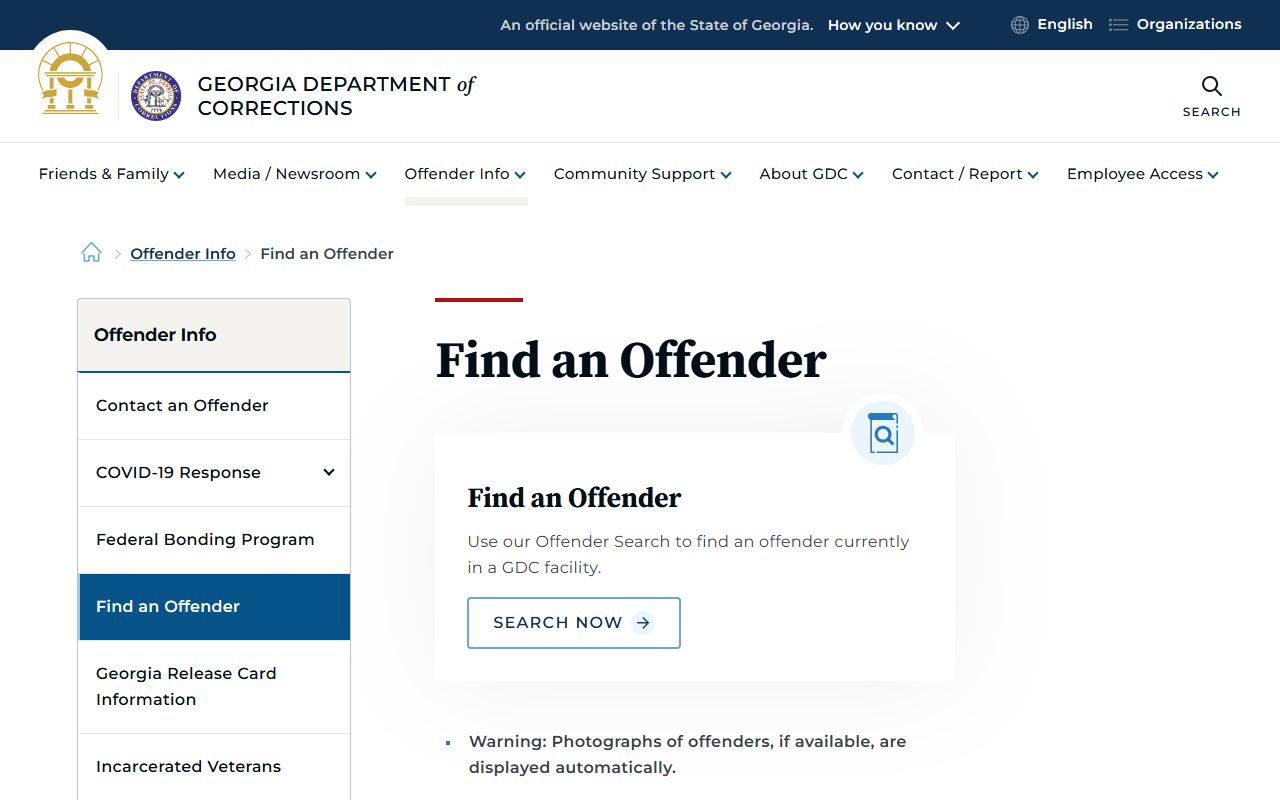
Use the GDC offender search for state custody status, then use local court records if the goal is a charge disposition or sentence from a Washington County case.
The GBI sex offender registry is a separate registry created under O.C.G.A. Section 42-1-12. It is not a general arrest-record search and should not be used to infer all charges or convictions for a person.
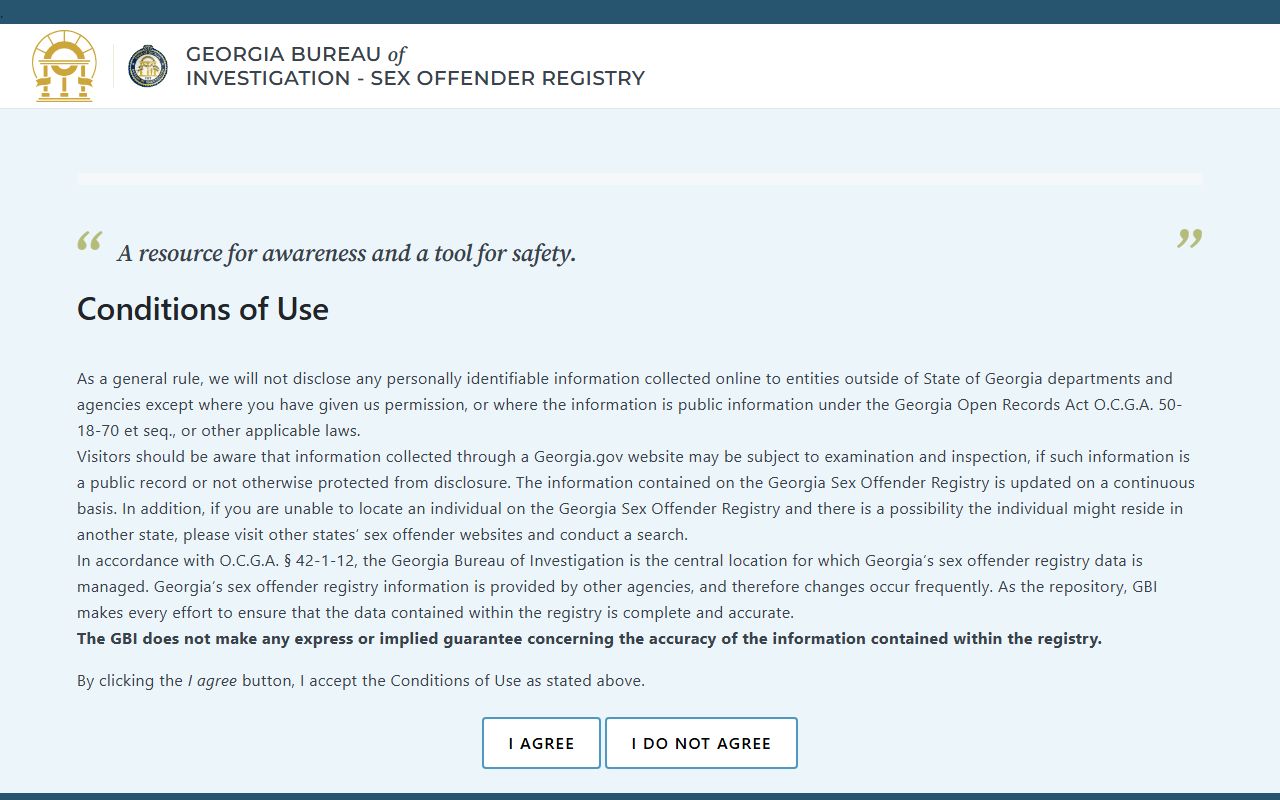
Registry data has its own statutory purpose and conditions of use, so it should be checked separately from jail, court, and criminal-history records.
Washington County Charge Codes
Charge rows may list an O.C.G.A. statute, a description, a misdemeanor or felony label, and a court. The public roster examples observed during research included warrant numbers, counts, statutes such as Georgia code sections, charge descriptions, misdemeanor or felony indicators, and court labels such as State Court or Superior Court. Those fields can point a requester to the right office, but the court record controls the final filed charge and outcome.
Felony labels usually point toward Superior Court once the case is prosecuted. Misdemeanor labels often point toward State Court. Warrants, first appearances, and commitment hearings may involve Magistrate Court before the case reaches the final trial court. Juvenile charge information is restricted and should not be expected to appear like adult charge rows.
Sealed and Restricted Charge Records
Georgia users often say expungement, but modern Georgia practice often uses record restriction. A Washington County arrest may involve the arresting agency and Georgia Crime Information Center process if no formal charge was filed. If a charge was dismissed, dead docketed, nolle prossed, or otherwise eligible, the person may need a prosecutor action, court order, or certified disposition depending on the case status and timing.
| Sealed Record | Restricted Record | |
|---|---|---|
| Purpose | Limits public access to a court or case file. | Limits public criminal-history dissemination. |
| Common Examples | Juvenile, adoption, mental-health, or court-ordered privacy. | Eligible dismissed, nolle prossed, dead docketed, or non-filed matters. |
| Proof | Court order or statute. | Certified disposition, agency processing, prosecutor action, or order. |
| Limit | Some official access may remain. | It does not erase every copy from every source. |
The juvenile-record sealing reference in Georgia juvenile law underscores why juvenile arrest or charge information should not be treated like adult public court data.
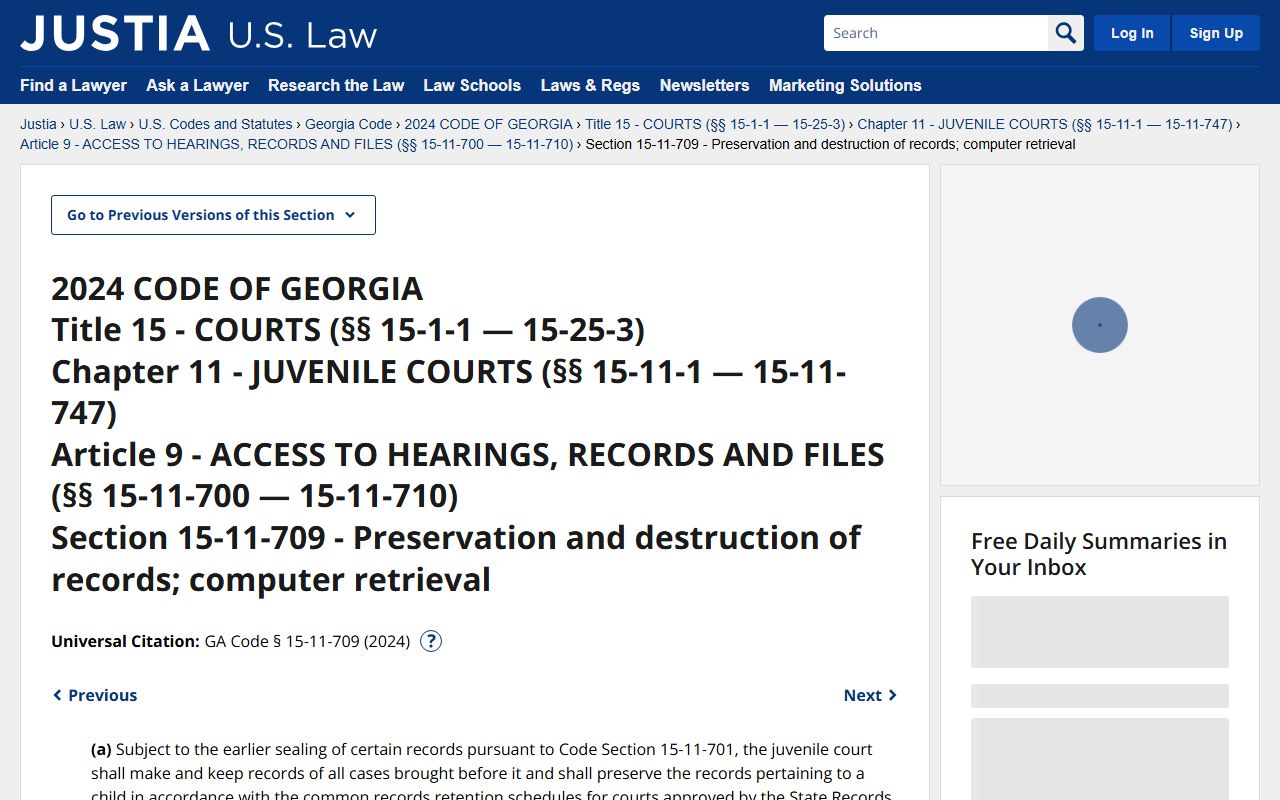
Juvenile charge records require a separate access analysis, even when the event looks similar to an adult arrest.
Restricted Washington County Arrest Records
Restricted categories include juvenile matters, sealed or restricted criminal records, adoption records, mental-health records, and files with personal identifiers such as Social Security numbers, financial account details, minor names, and protected victim information. Georgia's Open Records Act favors access, but O.C.G.A. Section 50-18-72 and other laws protect records made confidential by law. Court orders can also restrict access.
For practical requests, separate the source before asking for a record. The Sheriff's Office or city police source may answer arrest and booking questions. The Clerk of Superior Court verifies filed Superior or State Court charges, dispositions, sentencing, and certified copies. Magistrate Court handles warrant and first-appearance questions. Probate or Juvenile records should not be folded into an adult arrest-record search because different confidentiality rules apply.
Important: Booking charges are not convictions; verify final outcomes through the court disposition before relying on a charge record.